Dead storage vs. live storage: why the full pool isn't the usable pool
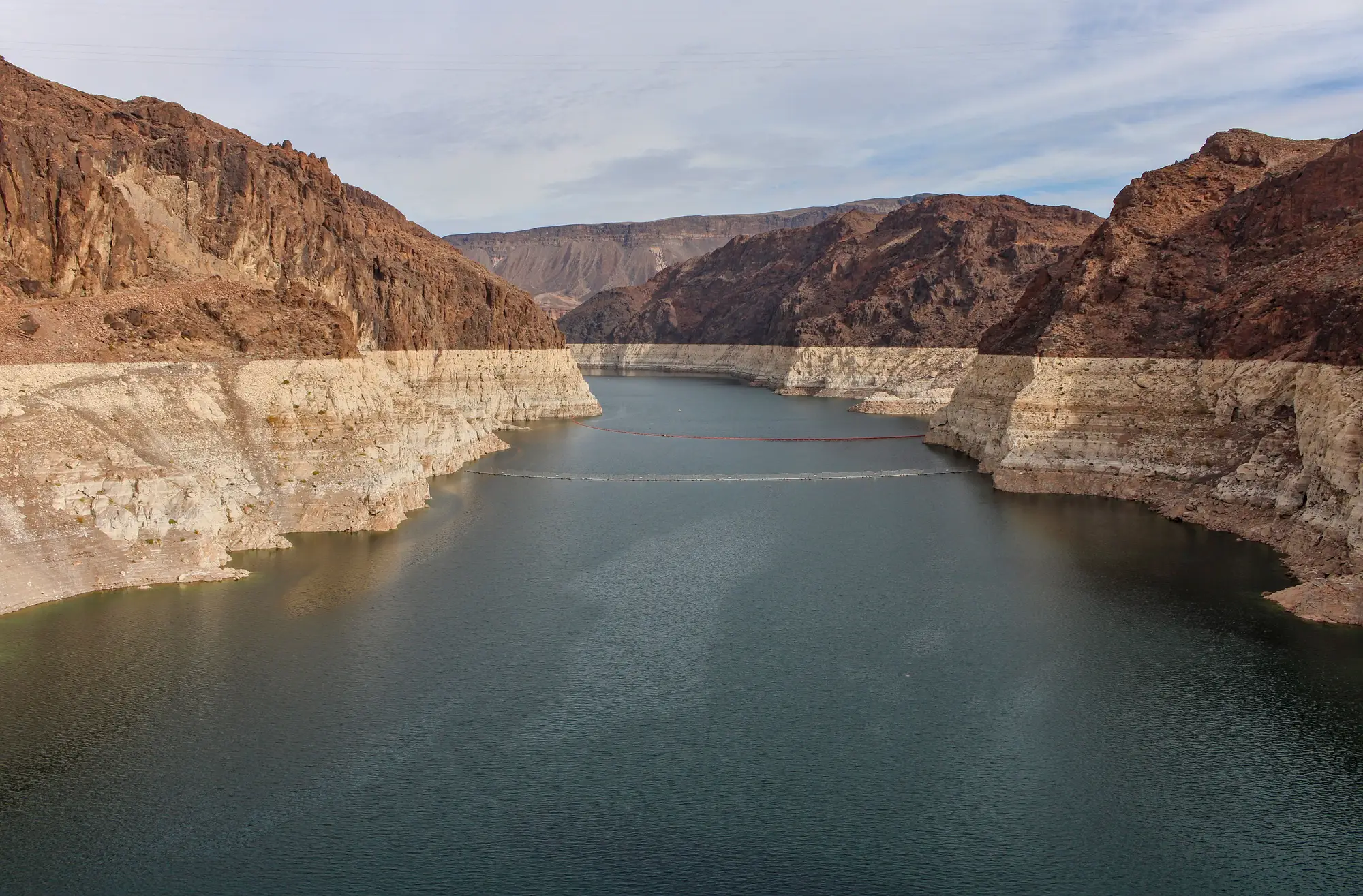
If you've ever pulled a dam's nameplate capacity off a spec sheet and compared it to what's available for generation or flood control, you've run into the gap between total storage and usable storage. That gap has a name: dead storage. It's the volume sitting below the lowest level the operator can draw from, and it stays there no matter how empty the reservoir gets.
What dead storage is
Every reservoir has an elevation below which water can't be released through the normal outlet works. That floor is set by where the turbine intakes, spillway gates, or low-level sluices sit, plus whatever sediment has built up on the reservoir floor since the dam went in. The water below that elevation is dead storage, sometimes called inactive capacity. It's physically there. Sonar would see it, a bathymetric survey would count it. But the plant can't turbine it, the irrigation district can't draw it, and the flood-control pool can't use it as buffer.
Live storage is everything above that floor, up to the normal maximum operating level (or the spillway crest, depending on how the project is operated). That's the volume that moves: it fills during snowmelt or wet season, drains during peak demand or drought, and is what a trading desk or grid operator cares about when sizing a hydro position or forecasting a basin's output.
Total storage capacity, the number you'll find in a project's original design documents, is dead storage plus live storage plus any surcharge pool above the normal max. It's a useful number for engineers sizing the dam. It's close to useless for anyone trying to answer "how much water can this system still generate with."
Why the distinction matters for your storage math
This isn't academic. A few consequences fall straight out of it:
Original design capacity overstates what's usable today. Dead storage pools designed decades ago fill in with sediment at rates the original engineers often underestimated. A reservoir built with, say, 15% of its volume allocated as dead storage may have lost meaningfully more usable volume to silt by now. The design document doesn't update itself.
A reservoir reading "empty" on a percent-full basis isn't literally dry. Operators and public disclosures usually report storage as a percentage of usable (live) capacity, or sometimes of total capacity. If you're comparing reservoirs across a basin or a portfolio and some report against live capacity while others report against total capacity (or don't specify which), you'll end up comparing numbers that aren't measuring the same thing, and reservoirs that look similarly full on paper may be nowhere close in practice.
Minimum operating level isn't zero generation forever, but it's close to it. Below the dead storage line, turbines typically can't draw water at normal head, or can't draw it at all. A reservoir sitting near its minimum operating pool is functionally out of play for dispatch even if the gauge doesn't say zero.
Area-capacity curves already bake this in, if you have the right one. The relationship between water-surface elevation (or surface area, if that's what you're observing) and stored volume is nonlinear. A properly built curve is anchored to the current live-storage floor, built from recent bathymetry rather than the original design volume. Working from surface area without that distinction, or with a stale curve that predates sediment buildup, will overstate how much water a basin has to work with.
Working storage estimates from the surface down
None of this changes if you're staring at satellite imagery instead of a gauge reading. A water-surface polygon tells you area; the area-capacity curve converts that to volume. The dead storage question doesn't go away just because you're watching from above. It just means the curve you're applying needs to reflect current, not original, bathymetry. Reservoir Monitoring builds a storage-level series this way: each reservoir's observed surface polygon run through its area-capacity curve, refreshed weekly across a basin or portfolio watchlist, without waiting on a utility's quarterly disclosure to tell you where things stand.
If dead storage has been throwing off your basin-wide storage math, it's worth seeing how a weekly, curve-based estimate handles it.